
Steele On The Job
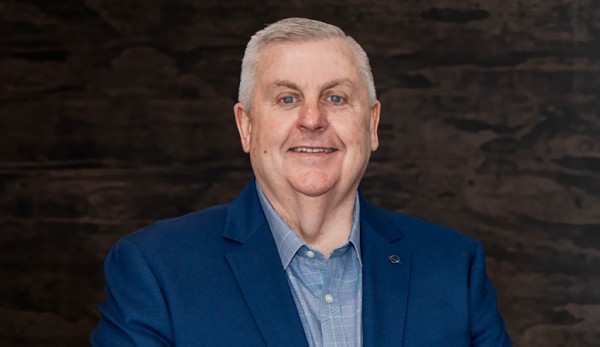
Brad Steele is the new CEO of the Auckland Trotting Club and has been in the job for a month. He’s charged with the challenge of getting the Club back into a strong financial position and making Alexandra Park a vibrant northern harness racing venue once again.
Bruce Stewart put some questions to Steele about his new role and his thoughts on the future of the Park.
Now that you’ve been in the role for a month, do you feel the health of the Auckland Trotting Club is better or worse than you thought?
It is probably better than I expected in some respects and more challenging in others. The fundamentals are stronger than many people give the Club credit for. We have a premier venue, valuable assets, multiple revenue streams, passionate members and committed staff.
The challenges are also real. We carry significant debt, horse numbers remain under pressure and confidence has been tested by several years of uncertainty. There is no value in pretending otherwise. What has encouraged me most is the willingness of people to become involved. I have met with owners, trainers, breeders, members, industry leaders and commercial partners, and I have been impressed by how many want to contribute to the Club’s future.
The strongest evidence of support is not what people are saying. It is what they are doing. People are volunteering their time, contributing ideas and putting their hands up to help. I am more optimistic today than when I started. Not because the challenges are not real, but because I have seen how many people are prepared to do something about them.
Ultimately, the future of Auckland harness racing will not be determined by the challenges we have inherited. It will be determined by what we do next.
One of the key solutions to paying off Alexandra Park debt is selling Franklin Park. Is there any further news on a possible sale?
Franklin Park remains an important part of the Club’s long-term financial considerations, and we continue to assess the available options carefully. Given the significance of the asset, our priority is achieving the right outcome rather than simply the quickest outcome.
While many people understandably see an outright sale as the obvious pathway, that should not be treated as the only possible outcome. We are also exploring credible alternatives that may allow the Club to retain ownership or an ongoing interest in strategic assets while still materially improving its financial position.
No final decision has been made. We are taking professional advice and evaluating the financial, commercial and strategic implications of the available pathways. Any option must be credible, deliverable and in the long-term interests of the Club and its members and participants.
Importantly, we are not relying on a single transaction to strengthen the Club. Debt reduction, revenue growth, operating performance, financing arrangements and asset optimisation all form part of the broader strategy.
The question is not simply what we can sell. The more important question is how we create the greatest long-term value from the assets members have entrusted to us.
Confidence is restored through sound decisions and visible action. Our responsibility is to examine every credible pathway before making an irreversible decision.
Will Franklin Park be sold as one parcel of land or divided into smaller packages?
Those are among the options being evaluated, alongside potential pathways that could allow the Club to retain ownership or an ongoing interest in the asset. Our focus is not on selecting the quickest or simplest structure. It is on identifying the approach that delivers the strongest overall outcome for the Club, its members and the wider industry.
We are taking professional advice, testing different scenarios and considering the value, timing, risk and long-term consequences associated with each option. Because no final decision has been made, I do not want to create expectations around a particular transaction structure.
Is there an opportunity for the terms of the loan repayment to be renegotiated?
We are always looking for opportunities to strengthen the Club’s financial position and achieve the best possible outcome for members. As the Club reduces risk, improves operating performance and develops credible pathways to reduce debt, it is appropriate to maintain constructive discussions with our banking partners about financing arrangements that reflect the Club’s evolving position.
We have a longstanding relationship with Westpac, and any discussions would be approached collaboratively and professionally. We also recognise and appreciate the support Westpac has continued to provide the Club. Our objective is not simply to renegotiate for the sake of it. Any revised arrangement would need to reduce financing pressure, improve flexibility or create a demonstrable long-term benefit.
Every dollar saved through better financing arrangements is a dollar that can potentially support debt reduction, racing, facilities and participant outcomes.
Have you decided who will be part of the Summit Implementation Group?
We are currently finalising the group and I expect that will be completed in the next 14 days. One of the most encouraging outcomes from the Summit was the number of respected industry (Australasian) participants who volunteered their time, expertise and networks to help move the industry forward.
The group will be deliberately small enough to remain effective while still bringing together the right mix of experience, skills and perspectives. The Summit was never intended to be a one-day conversation. Its value will be determined by what happens afterwards, which is why the implementation group will have a clear focus on priorities, accountability and measurable progress.
People were very clear that they do not want another committee producing a report that gathers dust on a shelf. We have enough reports, and probably enough shelves.
Success will not be measured by who sits around the table. It will be measured by what gets achieved.
Is there a groundswell of support for Alexandra Park to survive and thrive?
Absolutely. The strongest evidence is not simply what people are saying. It is what they are doing. Through the Summit and the discussions that have followed, owners, breeders, trainers, members, commercial partners and industry stakeholders have volunteered their time, shared ideas and offered to help deliver practical initiatives.
That does not mean everyone agrees on every issue, nor should they. What matters is that there is a strong shared desire to see Alexandra Park and Auckland harness racing succeed. The industry has more strengths than many people realise. We have passionate participants, valuable assets, a premier venue and people who genuinely care about the future.
Momentum matters. Our responsibility now is to turn that goodwill into measurable progress.
Is there a strategy to encourage southern and Australian horses north?
Horse numbers remain one of the most significant challenges facing Auckland and the wider North Island racing environment. There is no value in understating that. We are considering how race programming, incentives, feature races, ownership opportunities and the overall participant experience could make racing in Auckland more attractive.
People do not move horses simply because they are asked to. They do it when the opportunity stacks up competitively, financially and practically. Our job is to strengthen that proposition and work with industry partners on initiatives that make participation worthwhile. There will not be one silver bullet, but several well-designed initiatives working together could make a meaningful difference.
The industry has spent plenty of time describing the horse-number challenge. The next chapter must be about creating genuine reasons for owners and trainers to participate in Auckland.
What are your thoughts on Alexandra Park as a racing facility?
Alexandra Park remains one of New Zealand’s premier racing venues and one of the industry’s most important assets. Its central location, history, scale, hospitality facilities and commercial potential provide a tremendous foundation. Many racing organisations would value the advantages Alexandra Park already possesses.
That does not mean we should be complacent. Customer expectations continue to evolve, and the needs of owners, trainers, drivers, members and visitors must remain central to how the venue develops. Great venues never stop evolving. Our focus must be on practical improvements that enhance the racing experience, customer service, presentation and overall use of the precinct.
When people arrive at Alexandra Park, they should feel they are arriving somewhere special. That is the standard we should set for ourselves every day.
How does Alexandra Park compare with Ellerslie as a venue?
Ellerslie is an outstanding venue and deserves enormous credit for what has been achieved there. The vision, investment and execution have created a facility Auckland can be proud of. Alexandra Park’s opportunity is not to become Ellerslie. It is to become the best version of Alexandra Park.
We have our own distinctive advantages, including our location, racing format, hospitality infrastructure, commercial opportunities and potential role within Auckland’s broader entertainment and events landscape. Both venues are important to Auckland and to New Zealand racing. I do not see the relationship purely through the lens of competition. There may also be opportunities for racing venues to learn from one another and collectively strengthen the city’s racing and entertainment offering.
Are there commercial opportunities to utilise Alexandra Park more?
Without question. Alexandra Park is much more than a racecourse. It’s a significant Auckland destination with opportunities across racing, hospitality, events, entertainment, sponsorship and commercial partnerships.
One thing many people may not realise is that the Alexandra Park TAB already plays a nationally significant role within New Zealand wagering. It contributes approximately 12% of national retail wagering turnover and remains the highest-performing TAB retail agency in the country by market share. That demonstrates both the strength of the location and the loyalty of the customers who visit the precinct.
Auckland Trotting Club has more strengths than many people realise. We have a premier venue, valuable assets, a strong wagering presence and significant commercial opportunities.
Have you made any new appointments?
My immediate priority has been understanding the business, meeting stakeholders, listening to staff and reviewing the Club’s operational requirements. Before making significant appointments, I want to be confident that we are solving the right problems and adding capability where it can create the greatest value.
Good leadership is not about filling positions. It is about ensuring the organisation has the right people, in the right roles, focused on the right priorities. As the review continues and at the same time, any decisions must reflect the Club’s financial position and the need to maintain discipline.
Are you happy with current betting turnover?
Turnover is critically important to the long-term success of Alexandra Park and the wider racing industry, so I don’t think anyone involved in racing would suggest the job is done. There have been some encouraging signs, but the opportunity is not simply to maintain turnover. It’s to grow it sustainably.
One fact that many people may not be aware of is that the Alexandra Park TAB contributes approximately 12% of New Zealand’s total retail TAB wagering turnover, making it the highest market share TAB retail agency in the country. That demonstrates both the strength of the venue and the loyalty of our customer base.
Our focus remains on improving field quality and starter numbers and creating compelling racing opportunities that generate greater engagement.
Importantly, wagering growth is a collective effort. We work constructively with both HRNZ and Entain to continue identifying and unlocking opportunities that can increase turnover, improve the racing product and create stronger outcomes for participants and customers alike.
Where do the recommendations of Project Stamina sit in relation to Alexandra Park?
Project Stamina contains recommendations and themes that align closely with many of the challenges and opportunities being considered in Auckland and across the wider harness racing industry. The areas of sustainability, participation, ownership, confidence, collaboration and growth were also prominent in the Auckland Harness Summit discussions. That alignment is encouraging because it suggests there is a growing shared understanding of what needs attention.
The important issue now is how relevant recommendations are evaluated, prioritised and translated into practical action. The value of Project Stamina will not ultimately be measured by the quality of the report. It will be measured by what happens next. The industry is exceptionally good at producing reports. The next chapter is proving we can be equally good at producing results.
I am more optimistic today than when I started, not because the challenges are not real, but because I have seen how many people are prepared to do something about them. Confidence is restored through action, not words, and the future of Auckland harness racing will be determined by what we do next.
by Bruce Stewart, for Harnesslink


Comments