
 USA
USA NZ
NZ AUS
AUS CA
CA Europe
 Sweden
 France
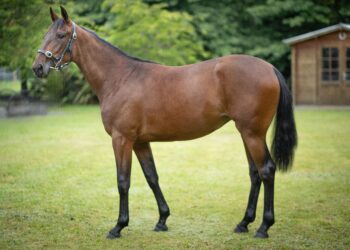
Standardbred horses are a mainstay at The Great Frederick Fair, and this year, breed aficionados hope to bring more fans to the sport of harness racing and the horses themselves.
Saturday is Standardbred Day at the fair, although there will be harness racing through Saturday. On Saturday, horse lovers will be treated to harness racing, the exciting Sulky to Saddle races and the Standardbred Horse Show. Sulky to Saddle will feature Standardbreds being ridden a mile at the trot in the speedy time of around two minutes.
The Standardbred Show will feature retired racers and those too slow to race. These horses will show off their gaits, their jumping ability and other traditional equine pursuits. Like thoroughbred owners, Standardbred owners are hoping to show the public that retired racing Standardbreds make good saddle horses and companion horses.
“There are only two fairs in Maryland that do harness racing,” said Colby Hubble, who stables horses at the Frederick Fairgrounds all year long. “The Pocomoke Fair and the Frederick Fair.” Harness racing brings out the betters at Ocean Downs, near Ocean City, and Rosecroft, in Prince George’s County. Betting doesn’t happen at the Frederick races, but by watching the local races, you can get an idea of what to look for if you want to try your hand at your closest off-track betting facility.
What makes Standardbred racing fun is the horses themselves, Hubble said. “They’re very mild-mannered.”
Standardbreds have two gaits, trotting and pacing. Some lineages are better for trotting, while others are geared to pacing. Most trainers have both.
Hubble trains her horses nearly every day after work. “My grandfather had Standardbreds,” she said. “I started coming to the barn when I was 12, and I got my first horse at 14.”
Standardbreds aren’t as tall as their racing counterparts, thoroughbreds. They are more muscular, however. Size isn’t usually a factor, Hubble said. “Smaller ones can be faster than the larger ones.”
The driver’s weight doesn’t matter, either. Drivers, like jockeys, tend to be athletic and drive anywhere from eight to 10 horses a night. “We start from a moving gate, not a standstill,” Hubble said. “It’s the ball in motion theory. Once they get going, weight doesn’t matter.”
Harness horses travel an average of 30 to 33 miles per hour. Nearly all the races are a mile long — twice around the track at the fairgrounds.
The Sulky to Saddle Race, also known as Racing Under Saddle, is becoming a fan favorite at other tracks, said Clarissa Coughlin, one of the coordinators of the Sulky to Saddle and the Standardbred Horse Show.
“We want to highlight the Standardbred and the versatility of the Standardbred,” she said. “They’re very giving horses. Some will race the night before a show the next day.”
Racing Under Saddle with Standardbreds is popular in Europe and has been revived at the Meadowlands Racetrack, where harness racing’s biggest American race, the Hambletonian, takes place. Most of the saddle jockeys are women.
“It’s not easy to get on the back of a Standardbred and trot at 30 miles per hour,” said Coughlin, who recently rode her retired winning Standardbred, Game Day, in a saddle race.
- By Karen Gardner Special to 72 Hours