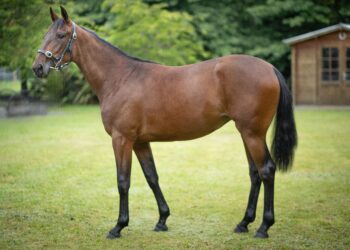
She probably didn’t get the national recognition she deserved but Southland mare Leyava certainly did a great job as a broodmare for the Sellars family of Myross Bush.
There are plenty of horse tales about where horses have come from and how luck was involved – right place right time. This is the story of Leyava and begins in the early 1940’s at Seaward Downs just east of Invercargill.
“They had a rabbit board that came around fumigating rabbits. It was a unit drawn by a horse. My father (Jack Sellars) asked the rabbiters what the horse was. They told him it was a good racehorse named Fortune’s Favourite. And that Davie Todd trained it. He rang Davie, who said yes he did train it, that it was no bloody good but it was a good family. So Dad ended up paying 25 pounds for her,” said Andrew Sellars.
Once in the paddock the family who were relative newcomers to the breeding of Standardbreds, had lengthy discussions about which stallion to choose before deciding to send her to Indianapolis, three times New Zealand Cup winner.
From that mating Pollyapolis arrived in 1946.
“An old friend of the family Jack Winter trained her initially before she went to Wes Butt. She won six races.”
Once Pollyapolis’s racing days were over Jack Sellers started breeding from her and she left a number a nice horses including Trigside (Flying Song) which won a Gore Cup (1963), and Va Vite which won ten races.
By that time Jack Sellars had also bought from George Youngson, Rustic Maid. She became the dam of twelve winners including 1950 New Zealand Cup winner Chamfer, and 1946 New Zealand Derby winner Free Flight.
“Dad was keen to breed a filly at the end of her career. He said to me that he wasn’t going to breed off two horses and asked if I wanted to take Polly (Pollyapolis) saying I could get a foal from her. I thought that was pretty good. Initially I was going to go to U Scott but I was advised because he was in such demand that if I missed out on getting in foal you didn’t get any refund. I thought I can’t afford that. Clem Scott advised me to go to Garrison Hanover. From that we got Leyava.”
A racing partnership between father and son was formed and Jack and Andrew Sellars began racing the mare.
“She had ability, but had a poor attitude to racing. Dave Kerr trained her and she won two races and had numerous placings. After she finished racing I took her over on my own for breeding.”
The name Leyava is a combination of Andrew’s wife Shirley and daughter Avalon’s names.
“We nearly lost her before we got her in foal the first time. She was on the property here and my neighbour had stored some bags of wheat. She pushed the door open and got an oversupply of wheat into her system. She was very close to dying. The neighbour rang Cliff Irvine in Christchurch and asked him what we should do. He said get her into a good muddy watery area and let her stand in there for a couple of days and she came right. We don’t know why it worked but you never questioned Cliff Irvine.”
Her first foal was Sassenach by Young Charles.
“I trained him as a two year with the help of Henry Skinner. Maurice Skinner had him for a few weeks just to get him used to company. I took him to a few trials and then sent him up to Jim Winter to train on a training arrangement.”
He soon showed Winter that he had ability as a three year old and had his first start on Cup Day in the Riccarton Stakes, finishing third when driven by Doug Watts. He won four races at that age including the New Zealand Metropolitan Trotting Clubs Three Year Old Championship.
“All the best three year olds in the South Island were in that race. He lost seventy yards at the start and won by three lengths in a New Zealand record time for three year olds. It was an outstanding performance.”
Bob Young at that point had taken over the driving.
“He was a very astute man. A real old Scotsman. We weren’t punters but after the Riccarton Stakes we had two or three hundred pounds in stakes money. He was in the Cross Stakes at New Year. I said to Jim that we should just put that stake money on him because he should win that race. We put it on but he broke up badly and he just made up a few places. Jim who was not used to big punting was a bit upset at my suggestion. He mentioned it to Bob who said God if I’d known that I would have tried a bit harder. He thought he could have still won but was just saving the horse.”
The following year as a four year old he won six races and started in the 1971 Interdominions Series at Addington.
“He was only a four year old. He won his first two heats and ran second in his third heat. He was the second highest qualifier for the final behind Holy Hal another Southlander.”
The final was won by Junior’s Image who was later disqualified after returning a positive swab. The promoted winner was Stella Frost.
As a five year old, Sassenach returned to racing at Ashburton in October before progressing to the Cup meeting in Christchurch raced then over four days.
“He was throwing his head around a lot and Bob Young couldn’t steer him. One vet suggested that it could have something to do with the seed out of the grass. Jim threw a nose guard on him on the third night and he duly won and was roundly booed because he’s been pretty well backed on the first two days.”
He came out on the last night of what was a four day cup carnival and won the Ollivier Handicap against the Cup horses.
He then travelled north for the Auckland Cup and ran fifth on a wet track showing signs of soreness.
“He was sent home to me and I pottered around with him and treated his legs. I took him to Riverton on the old grass track and won the Riverton Cup with him. Apart from Riverton, which was an equalisator meeting, I couldn’t quite get a win with him.”
Then export agent Bob McArdle approached Sellars and he was sold to Canada in June 1976.

Sassenach winning as a three year old at Addington
His New Zealand race record was 78 starts for 12 wins and 6 seconds and 6 thirds.
Leyava’s second foal Ryal which was by Canny Scot was also racing and winning races at this stage. Jim Dynes had bought him as a weanling.
He was also fashioning a good racing record and ended up winning 8 races including the New Zealand Autumn Stakes and Canterbury Free For All in 1973.
He raced against what was a vintage group of open class pacers like Robalan, Speedy Guest, Young Quinn, Hi Foyle and Arapaho.
“He went to America and won forty odd races over there.”
Shavande was Leyava’s next foal. He was by Hundred Proof and was trained by Andrew from his property on Roslyn Road just out of Invercargill.
“He was as good as any of the horses she’d left. He had a very bad attack of strangles. Peter Williams (Vet) did a hell of a good job to save him.”
After being nursed back from this major setback he won a double at Wyndham.
“He also won a Gore Cup and he was sold to America. Doug McNaught thought he was an outstanding horse. He was on his way to cup class no doubt about that.”
The next foal from the mare was Hi Lo’s Forbes colt Stylist.
“He had some ability but was bad in his gait when tried at high speed. Jim Dynes took him over to try and straighten him out. They won a race with him and one for me.”
Lumber Dream was the next port of call for Leyava and that mating produced another colt named Profiteer.
“The most intelligent horse I ever had. He was cunning with brilliant speed.”
He was trained initially by Sellars and recorded his first win at Wyndham in November 1977 winning by three lengths, running the 2400 metres in 3-08.
“Peter Wolfenden phoned me wanting to buy him but I said he was too good to be selling.”
A year later although still racing well, Profiteer was starting to win the battle of the wills in the south so he was sent to Gavin Hampton in Canterbury to train.
“He was sent up prior to the Reefton Cup which was the richest C2 race in the country at that time. He won that race and came back and won two races at Addington. Then Lucky (Profiteer) worked Gavin out so he came back down here.”
At that point Sellars had to reinvent the horse’s training and racing regime.
“I knew the whip and Profiteer didn’t go together so I got wee Austin Stack to drive him. He was a quiet wee driver. He got placing after placing with him but never won. He was running off long marks and doing not too bad so I whipped him up to Addington and I won with him. I got Paul Hampton (Gavin’s son) to drive him because I thought the horse would know Gavin. I’ve never yelled so loud for a horse.”
Profiteer finished his career in March 1982 and commenced a short career in the stallion barn.
He sired 35 live foals and left three winners – Auburn Profit (6 wins), He’s A Gun (5 wins) and The Developer (2 wins).
“He was never going to get a lot of mares because he was a cheat, but a very fast one.”
Socialite (Armbro Del) was the mare’s next foal. She was unraced.
Zabadak (Nevele Bigshot) was the next off the Leyava production line. He initially won five races for Henry Skinner including an impressive double at Wyndham in March 1981 culminating in the 3200 metre Wyndham Cup.
“Peter Davis drove him. Henry drove him to win on the first day but he decided to drive another horse in the stable (Eden’s Joy off 40 metres 6th). Peter took him straight to the front and donkey licked them (4 ½ lengths in 4-11.0 over 3200 metres on slushy track). At the time it was a Southland record.”
At the end of that season Skinner decided he wasn’t going to carry on training.
“Allan Devery phoned me and said would I consider sending Zabadak there as he was getting a bit more serious about training professionally. I said yes as long as he took another horse called Stampede. Henry had qualified Stampede. Allan wasn’t very sure about it so he rang Brendon Fahy, a good friend of mine. Brendon told him that if Zabadak won four races for him next season Stampede would win seven so Allan took him.”
It was the beginning of a very fruitful relationship between Sellars and Devery.
“Allan was an outstanding conditioner and trainer and he won the next seven races with him (Zabadak). He won all eleven races with Stampede.”
One race that remains in Sellars memory was the day Zabadak won at the Canterbury Park Trotting Club meeting in January 1983.
“He tried to kick Gavin (Hampton) out at the start. It was a mile race. He’d decided that they weren’t going fast enough in the lead up and he started bucking and kicking. He was kicking himself right out the back by five and six lengths. He settled down and caught the field and Gavin, who could be pretty severe when he wanted, decided to send him around the field at the half. He beat the likes of Hands Down. That’s the sort of horse he was. On his day he could beat anything.”
His most important win was in the Firestone Cavillino Stakes on Cup Day 1983. He won eleven races from 64 starts banking $53,325 in stakes.
At that point Zabadak’s younger brother Stampede had also finished his racing career. He also won eleven races including the Interdominion Consolation, and he finished second in the Kaikoura Cup and third in an Easter Cup.
Sellars was keen to give him a shot as a stallion.
“I was keen for him to have that chance. He was a beautiful horse with a lovely nature. He had arthritic knees which restricted him a little bit as a racehorse.”
He notched up a moderate record as a sire, helped by two quality horses in Defoe and Stands To Reason.
“At the height of his career he (Stampede) had 194 mares. It was the season when Defoe had won the Lion Red Mile and was dead unlucky not to win the Messenger. And Brendon Fahy’s horse Stands To Reason won the $150,000 Sires Stakes Final in Auckland (1990).”
Post Stampede Leyava had just two more foals, both fillies Saligna (Lumber Dream) and Sakina (Son Of Afella) and that’s when a breeding arrangement with Brian West began.
“We had a few mares. Brian suggested that he would take them all up there, look after the stud side of it and prepare the progeny for sale. It never worked out that great. I can’t blame Brian as he used good sires. It was one of these breeds that seem to mix better with sires like Nevele Bigshot, Hundred Proof and Canny Scott.”
The horse market back in the mid 80’s was relatively buoyant and in February 1986 Sellers was offered big money for the unraced Saligna and Sapele.
“Sapele was trained by the Lees. She was about to go to the trials when I was approached by Paul Davies on behalf of John Curtin to see whether he could buy these two Lumber Dream mares. I said no because I didn’t want to let two Lumber Dream mares go out of this breed. Anyway I put a price on them $100,000 for Saligna (Lumber Dream –Leyava) and $60,000 for Sapele (Lumber Dream – Socialite). He bought the $100,000 one. I sent the other one (Sapele) to stud and she died.”
From eleven named foals Leyava left seven winners of fifty five New Zealand races. A grand record for a mare that was bred from a mare bought from the Rabbit Board.
Although the breed has faded somewhat, like many of the old pedigrees in this country there are still a number of mares that trace back to Leyava being breed from.
Brian West is breeding from a Mach Three mare named Titled who is a great granddaughter of Leyava. She has a qualified two year old called His Royal Harness who is trained by Chris McDowell and a Stunin Cullen yearling filly.
West is also breeding from two other granddaughters of Socialite in Flashbang (McArdle– Susan Who) and Famous Lover (Dream Ahead – Susan Who).
Well that’s the Leyava story, and it’s really only half the tale because of course foundation mare Pollyapolis’s other filly Va Vite (by Young Bob) has also plenty of upside to her stud career.
She left Largs (Lordship) the dam of Glen Moria (10 wins) and handy performers Calton Hill (Smooth Hanover) 5 wins, and his full sister Churnside also 5 wins.
But ………….. another story for another day perhaps.
Bruce Stewart
Southland Harness Racing