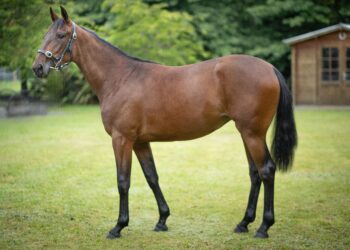
Tina Sugarman, author of one of the top equine novels of 2016-2017, Horse Flesh, has agreed to share excerpts of her book with Harnesslink. Horse Flesh is a thriller mystery fiction novel based around a Standardbred racetrack in Ontario, Canada. It is the first novel ever penned by horsewoman, Tina Sugarman.
Each week, Harnesslink will feature an excerpt from Horse Flesh. If you wish to purchase the book either in paperback or ereader formats, click here.
Here is this week’s 6th excerpt from Horse Flesh!
Horse Flesh by Tina Sugarman
A LUNCH APPOINTMENT
The Old Mill was the priciest restaurant in the Erinsville area. Phil had expensive tastes. But Al considered that lunch was a small price to pay for Phil’s expert advice.
In over two decades, Phil hadn’t steered him wrong yet. Al was profoundly grateful. He was keenly aware that things could have turned out very differently, had it not been for Phil’s guiding hand. Phil had first approached him at a time when Al’s company was struggling to survive. Al was a hard worker but he was no politician.
McTavish Construction’s bids for government contracts were missing by a mile. Phil was a wheeler dealer who knew all the right people at City Hall. Phil’s ace bids and McTavish Construction’s quality workmanship had proved to be a winning combination, making a small fortune for both of them.
“How’s things?” Phil asked, joining him at the table, looking suntanned and relaxed. “What have you been up to?” Al countered. “Let’s get a couple of beers,” Phil suggested, loosening his tie.
The years had been kind to Phil. Perhaps, Al thought, it was because his friend had never married. His eyes were still the same shade of brilliant blue as the day they’d met. Unlike Phil, Al hadn’t found the time for too many vacations over the years. Phil was always off to some exotic place or other. He had it made! The drinks arrived.
“Shoot!” Phil said taking a swig of beer. Al laid out his plan for introducing TCO2 testing at Iroquois Downs. “Okay,” Phil said, running a hand through his hair, which was long and floppy and gave him a youthful air, despite a few grey hairs. Al was a short back and sides man, himself.
“You got two problems. First, there’s no money for testing. Second, the horsemen will hate the idea.”
“That’s it in a nutshell,” Al agreed, feeling things were pretty hopeless. The steak arrived, the most expensive dish on the menu.
“You deliver the horsemen and I’ll get you the money somehow,” Phil said confidently, his knife poised over the meat.
“How?” Al asked. “Usual channels…leave it to me,” Phil replied cheerfully, waving his fork at Al. “You going to the Maple Leaf game on Sunday?” he added. “I haven’t decided,” Al confessed.
“Meaning that wife of yours doesn’t want to go,” Phil diagnosed astutely.
Unfortunately, it was all too true.
“If she changes her mind, it’s not too late to get tickets. Just give me a call, I’ve got the best seats in the park!”
“Sounds good,” Al smiled. Phil was a useful man to know, he’d discovered over the years. Where would he be without him?
However, this latest caper, Iroquois Downs, wasn’t working out too well so far. It looked like Al had landed in the middle of a hornet’s nest. He said as much to Phil.
“Listen,” his friend said, dropping his voice and leaning across the table. “The racetrack’s up for grabs, you have to know that! It’s right next to the highway.”
“Prime building land,” Al agreed soberly, picturing the backstretch sprouting high rises. “Look what they’re doing in the US,” Phil said.
“You mean casinos?”
“You could have Slots at Iroquois Downs too. The place could be a mini Las Vegas,” Phil declared, taking out a wad of cash, peeling off a couple of bills and tossing them onto the table.
“That’ll take care of the tip,” he smiled, rising to his feet. So that was why Phil had encouraged him to get involved with Iroquois Downs, Al realized belatedly. His friend was always one step ahead of him.
“Hey! I do believe you’re getting attached to the old place!” Phil exclaimed.
“I’d dearly like to turn things around, yes,” Al replied earnestly.
“Then you know what you have to do,” Phil said “And I’m right behind you, pal.”
Al wondered where Phil really stood on the issue of Iroquois Downs Raceway. Only time would tell.
THE MEETING
Ten days later as Al McTavish rode the elevator to the sixth floor of Iroquois Downs grandstand, he mentally prepared himself.
A tricky and unpredictable morning lay ahead. When he entered the boardroom, he counted heads.
Everyone was present, except for Judge Jewells, the man chairing the meeting. The people on Al’s team, from Finance, Publicity and Admin, gave him a friendly wave. He spotted the horsemen’s representatives, Jim Mercer and Bob Summers, sitting at the table looking a little disheveled, with glum faces.
They were the only men in the room who weren’t wearing ties. Over by the window, a pair of pasty faced guys in dark suits were avidly sipping coffee from paper cups. They’d be from the Provincial Racing Commission, Al surmised, the body responsible for policing the harness racing industry.
He walked over and introduced himself. Then the door opened and the presiding judge, John Jewells, strode into the room. Jewells immediately called the meeting to order, banging his fist on the table and giving those still on their feet a withering glance.
“We have a new Director at Iroquois Downs,” he fired off, pointing at Al.
“Director McTavish has called this meeting to put a stop to cheating.”
Only the horsemen’s reps looked startled. Everyone else was in the know.
“You all saw the shambles at the fillies’ Diamond Stakes final a couple of weeks back,” Jewells continued.
“Two long shots winning in a dead heat! But there’s gonna be no more cheating at Iroquois Downs from now on. That means no more baking soda, for anyone not keeping up! There’s a simple solution. Test for it. They’ve been doing that in Quebec for months now. If the French can do it, we can damn well do it here, too!”
With that, Jewells shut his mouth like a trap and glared defiantly around the room. Everyone started talking at once.
“One at a time and address the Chair please,” Jewells roared, bringing his fist down onto the table with such force that it shook. Immediately, order was restored. Al kept a low profile, watching and listening to reactions from the various quarters. Predictably there was outrage from the horsemen, enthusiasm from the Provincial Racing Command, caution from Finance and excitement from Publicity, who could hardly wait to break the good news to the media.
“Over to you, Mr. Director,” Judge Jewells trumpeted after everyone else had had their say.
“I’d like to thank you all for coming here today,” Al began graciously, receiving a scowl from Jim Mercer.
“Before we go any further, I’d like to share something with you.”
He gave a nod to Admin, who began distributing sets of stapled sheets. “It’s a research paper,” Al explained.
“By a prominent veterinarian at Erinsville Equine Clinic. I suggest you read it over carefully before we discuss this any further.”
Silence descended, broken only by the ripple of pages being turned. Mercer picked his up, took one look and threw it down on the table. Al took a cigar out of his pocket. “Anyone got a light?” Al asked.
No one did. Eventually everyone was done reading, or in Mercer’s case, done staring at the table.
“Judge Jewells, I’d value your opinion on this,” Al said, knowing precisely what his opinion would be. They had already discussed it at length.
“Well,” a beetle-browed Jewells said, looking across at Al, “I think I can summarize this pretty simply. According to Dr. Winterflood, there’s no harm in using baking soda in moderation. But at higher levels, it can cause gastrointestinal distress and in rare cases, death.”
“It can cause cardiac arrest,” one of the PRC men exclaimed. “It says it right here on page four!” Dr. Winterflood’s paper had evidently touched a raw nerve.
“Time for a prayer?” Judge Jewells responded with a twisted smile.
“I’d suggest, ‘Please God, if I come back in another life, don’t let it be as a Standardbred racehorse’, not that I’m a religious man.”
A horrified silence followed. “Our members aren’t criminals,” Bob Summers protested. The other PRC man spoke up.
“Certainly, we need to decide what levels of baking soda are safe,” he said soberly.
“We don’t want to be responsible for horses dying at Iroquois Downs.”
“What do we need another test for?” Mercer challenged. “We got enough of them already!” He looked over at Bob Summers, who stared up at the ceiling. Al could tell that Jim Mercer was getting pumped up.
Before he could detonate, he jumped in with a rhetorical question. “What do we have to lose?” he asked. “The goodwill of the horsemen who put on the show,” Mercer shouted, red faced. “Where would you be without us? I’m up at 6 a.m. every day, so are the rest of the guys. Don’t get to bed before midnight on race nights. I hardly see my family! I’m out there in the cold freezing my ass off all winter. I don’t ever get a holiday, not that I’m asking for one…”
You could have cut the air with a knife.
“Look . . . er, Jim,” Al said. “We all value the contribution the horsemen make. But the handle is falling. Aside from major stakes events, the public is staying away.” He paused to let that fact sink in. “It won’t help the horsemen if we have to cut purse money back again. If things get any worse, we could even be forced to close the place down.”
“They’ll never do that!” Bob Summers exclaimed. “Iroquois Downs is the top harness racing track in Canada!”
“It’s a major racetrack, yes,” Al conceded. “But it’s costing our government a small fortune. We can’t justify this kind of expense indefinitely. We have to get the handle up somehow!”
Bob looked beat, but Mercer wasn’t giving up so easily. “This paper doesn’t change a thing!” he retorted angrily. “You can’t do this without proper negotiation. We’re going to have to call a strike.” Mercer’s threat was hardly a surprise.
“Go right ahead,” Al said coolly. “But if the press gets a hold of this…” he picked up Winterflood’s paper, “the public won’t have a shred of sympathy for the horsemen. They’ll just feel sorry for the horses. The animal rights groups will be crawling all over us. We’ve got enough controversy already with the betting ring scandal. So, go ahead and strike. You’ll be digging your own graves!”
Mercer glowered and said nothing. Not so, Bob Summers. “If you think you can push us around, you’re dead wrong! We ain’t just gonna roll over an’ play dead,” he declared, looking at Mercer for support.
“That’s right!” Mercer agreed.
“Okay, what are you saying, Bob?” Al asked wearily. Were they going to be here all day? he wondered. He had already played his trump card.
“You gotta give us a package. Something we can take back to our members,” Bob said, not unreasonably. It dawned on Al that Bob might actually be on his side.
“What’s your idea here?” Al asked. “Give us a bigger percentage,” Bob suggested. “The percentages are set by the politicians. It’s not in my control,” Al explained.
Bob hung his head. Judge Jewells jumped in. “You’re just going to have to convince the horsemen that this is in their best interests, aren’t you?” he said, his tone leaving no room for discussion. “Pie in the sky!” Mercer shouted. “You gotta give us more than vague promises,” Bob said, “or…,” he paused.
Right on cue, Mercer jumped up off his chair. “We’re ready to walk out right now!” he threatened. The two PRC men exchanged nervous glances.
Al waded in. “Fellows, let’s not get too excited here. There are no guarantees but…you all know what’s going on south of the border.”
“You mean Slots?” Bob asked incredulously. “Here? At Iroquois Downs?” “There could be a great deal at stake here,” Al replied, noncommittally. “If this is a come-on . . .” Mercer growled.
“No promises,” Al said. “But if we can get things cleaned up around here, then anything’s possible.”
“I dunno,” Bob replied uncertainly. “What d’you think, Jim?”
“Not good enough!” Mercer snapped.
“It’s the best I can do,” Al said. “Take it or leave it.”
Mercer leaned over towards Bob Summers. A muttered discussion followed, inaudible to Al. “We’re going to have to consult our members,” Bob said at last, “but I reckon we gotta try to get the job done.”
Mercer threw his cap on the table. “The hell we will,” he cursed roundly. There was an awkward silence.
“Anyone have a better idea?” Judge Jewells asked. No one spoke. “Then I’ll take a vote. Let’s have a show of hands: those for the motion to introduce TCO2 testing?”
Not surprisingly Mercer was the lone dissenter.
“The ayes have it. Motion carried,” Jewells declared. Al stuck his cigar in his mouth. “Here,” Jewells said, tossing him a lighter.
“Can’t bear to see you sucking on that thing a moment longer. Meeting is closed,” the judge added hastily.
Everyone but Al and the judge filed out. Mercer was the last to leave, his face like thunder.
“We’ve been lynched today!” he muttered.
The judge waited until the door slammed shut behind him. “A good morning’s work,” he declared approvingly.
“It’ll all come to nothing, of course,” he added. Al stared at him, astonished. “The guys with deep pockets will challenge the test in the courts, get the judgments against them overturned on some technicality and make fools of us all. Besides, there’s no money for it,” Jewells said.
“Don’t worry about the money,” Al reassured him, puffing on his cigar. “As for the courts. . . we’ll just have to hope for the best.”
“Better put that thing out,” Jewells warned, with a hint of a smile, “before the smoke alarms go off!”
It occurred to Al that he’d found an ally in the irascible Judge Jewells and maybe in Bob Summers, too.
Right now, he needed all the friends he could get.
Stay tuned in to Harnesslink every week for another excerpt from Horse Flesh!
Each week, Harnesslink will feature an excerpt from Horse Flesh. If you wish to purchase the book either in paperback or ereader formats, click here.