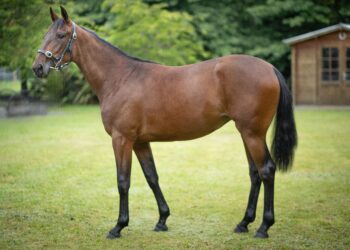
Don’t know if this is on your bucket list, but this Sunday you can watch 2-year-olds pull carts around a racetrack at roughly 15 mph.
It’s the annual, all-afternoon Spring Matinee Races at Pinehurst Harness Track, about two hours east of Charlotte in historic, well-heeled Pinehurst. While best known for the Pinehurst Resort and fabulous golf courses, which date to the 1890s, a specialized type of horse racing has been a part of the sporting mix for a century.
Many grandees who visited Pinehurst to escape northern winters loved equestrian action. In 1915 the Pinehurst Jockey Club opened a harness-racing training track; a winter training facility soon sprang up.
Harness racing is where a driver steers a lightweight, two-wheeled cart pulled by one of two kinds of race horses: Pacers run by alternating their left- and right-side legs; trotters run front-left/back-right alternating with front-right/back left. Either way, the result is fast-pounding hooves pulling a helmeted rider perched on what looks like a conjoined unicycle.
The 111-acre grounds nowadays hold horse barns with about 300 stalls, several paddocks and three tracks. Sunday’s event – centennial ceremonies followed by eight races – will be 1-5 p.m., with gates opening at 11 a.m. for parking.
That this is called a “matinee” doesn’t necessarily refer to the races’ afternoon staging. Training season here runs mid-October to early May; the steeds are owned by harness fans from across the country. The spring races offer an early look at the 2015 season’s pacers and trotters.
It’s also a coming out: The horses here for winter training are all 2-year-olds – the minimum age for racing on the pro harness circuit. Many will continue to run for a decade; some race until the ripe horse age of 14. (Professionally, they need to do a 2-minute mile to make any money.)
The 2-year-olds on Sunday will race five at a time on the half-mile sand/clay track, generally trotters-vs.-trotters and pacers-vs.-pacers. The modern-day Ben Hurs gunning down the straightaways and turns tend to be trainers, assistant trainers and perhaps a groom or two.
They should not be called jockeys, by the way. Jockeys ride atop horses; these guys sit in two-wheelers behind their horses, holding the drive lines connected to the harnesses and sparingly tapping instructions to the horses with their whips.